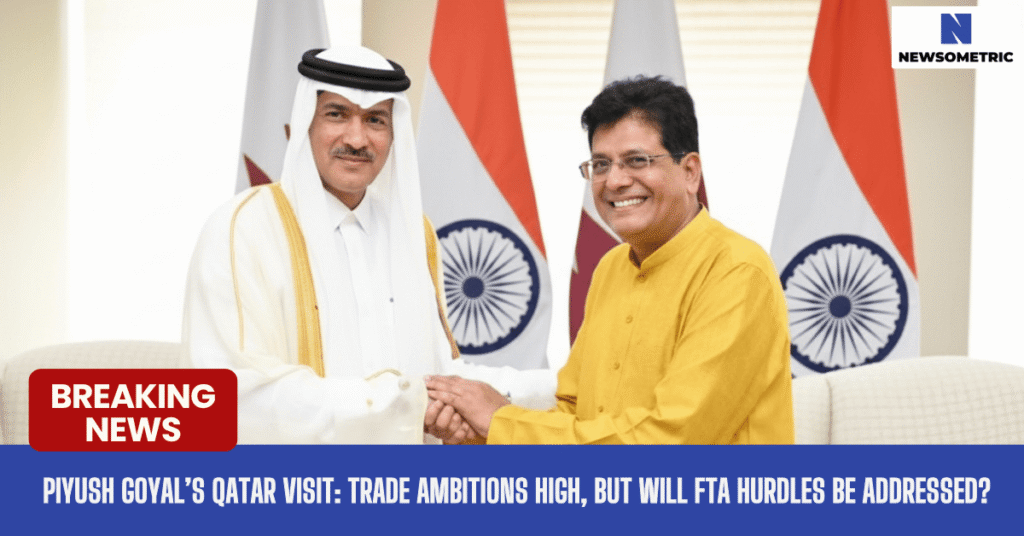
Union Commerce & Industry Minister Piyush Goyal kicks off a pivotal two-day visit to Doha, co-chairing the India–Qatar Joint Commission Meeting from October 6-7, aiming to deepen commercial, investment, and sectoral ties between both nations. With Qatar regarded as one of India’s most important Gulf Cooperation Council (GCC) partners and bilateral trade topping $14 billion in 2024-25, expectations are high for tangible progress—yet major roadblocks persist beneath the bonhomie.
India–Qatar: Seeking More Than Business as Usual
Both governments are putting a spotlight on reviewing bilateral trade, finally tackling non-tariff barriers, and driving forward FTA/Comprehensive Economic Partnership Agreement (CEPA) negotiations, in addition to new sectoral cooperation in agriculture, finance, tourism, healthcare, and beyond. Goyal is joined by senior ministry officials and a robust industry delegation engaging directly with Qatari business forums to catalyze direct enterprise links and investments.
The agenda’s breadth, covering trade facilitation, sectoral investment, financial partnerships, and technology transfer – reflects India’s keenness to cushion itself from global trade headwinds, diversify export markets, and attract Gulf investment at a time of global economic uncertainty and shifting alliances.
Progress Praised, But Stubborn Gaps Remain
Honestly, while such bilateral meets foster goodwill and there’s cause to champion India’s expanding global market ambitions, the FTA push is a grind. India’s trade deficit with Qatar remains wide, heavily leaning on energy imports; in 2024-25, India exported only $1.7 billion worth of goods compared to over $14 billion in imports, with LNG dominating inflows. Negotiations still face legacy barriers: market access, tariff flexibility, regulatory coherence, and genuine opportunities for Indian industry and Qatari diversification.
India and Qatar have publicly set ambitious targets: doubling trade by 2030 and sealing an FTA soon. Yet, recent years show that such aspirations, while positive, often hit bureaucratic inertia and shifting diplomatic priorities. Celebrating ministerial dialogue is easy – it’s execution, and breaking through legacy issues, that determines success.
The Stakes: Goodwill and Tough Questions
India’s outreach in the Gulf isn’t just about trade—it’s about remittances, energy security, and strategic presence. Partnering with Qatar in finance, tourism, and healthcare is smart diplomacy. However, real credibility comes not just from MOUs and handshake photos, but from resolving on-ground challenges for exporters, investors, and workers.
As the visit unfolds, observers will watch not just for diplomatic statements but for concrete deliverables: Will the Terms of Reference for the FTA talks close? Will Indian businesses gain improved Qatari access? Are sectors like agriculture and tourism ready for real growth, or will old hurdles linger? One thing is clear – the need for bold execution and transparency is as high as the sense of occasion.