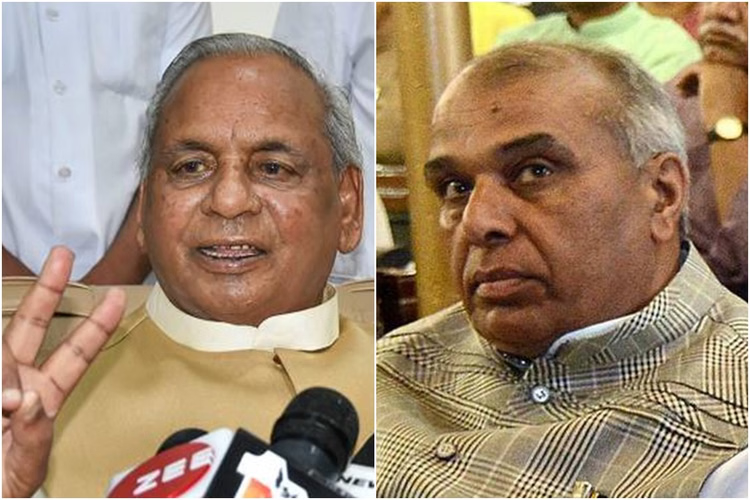
Indian politics has witnessed defections, midnight swearing-ins, and spectacular collapses of governments. But February 1998 remains singular. For a brief and bewildering stretch, Uttar Pradesh had two men claiming to be Chief Minister simultaneously, in the same Secretariat complex.
It was not a metaphor. It was a constitutional rupture.
Senior journalist Rahul Srivastava, who was physically present inside the Lucknow Secretariat during those dramatic hours, has described the atmosphere as “total administrative paralysis wrapped in political theatre.” According to Srivastava, one claimant to the chair held his hand and said, “Stay here with the camera. Otherwise, I may be thrown out of the window.” It was a remark laced with anxiety. Power had become precarious.
To understand how India’s largest state reached such a surreal moment, one must return to the unstable coalition arithmetic of the mid-1990s.
A Coalition Built on Sand
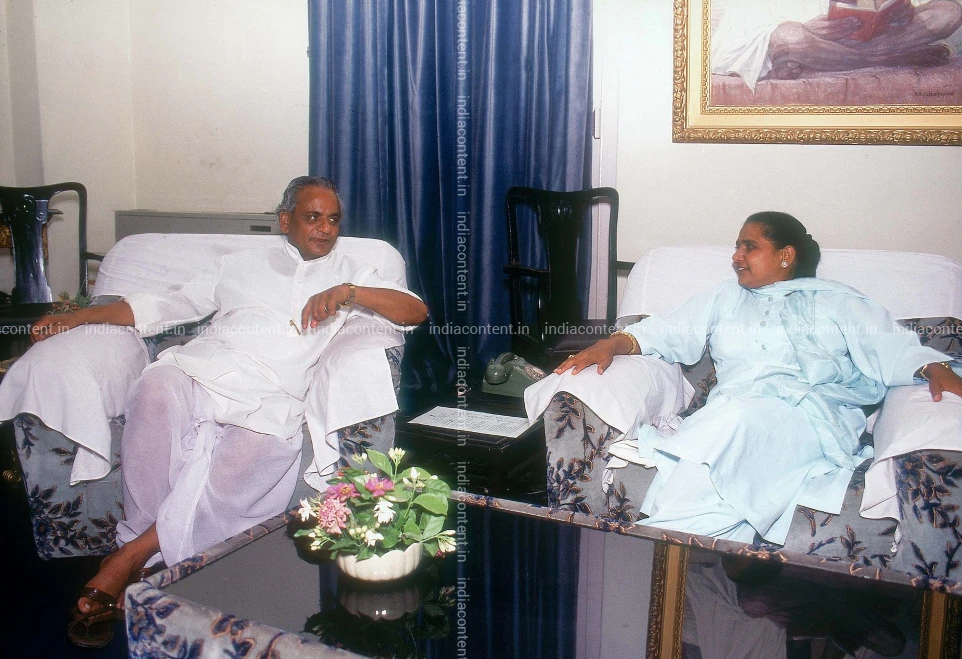
The 1996 Uttar Pradesh Assembly elections produced a fractured mandate. No party secured a majority. Eventually, a rotational power-sharing arrangement emerged between the BJP and BSP. Mayawati took the first turn as Chief Minister; later, Kalyan Singh assumed office under the arrangement.
The alliance collapsed. Support was withdrawn. But Kalyan Singh, a combative and politically agile leader, refused to concede defeat. Through defections and breakaway factions, he reconstructed a majority. Congress legislators split. A faction of BSP MLAs defected. New groupings with elaborate names were formed overnight.
The cost of survival was expansion. His council of ministers reportedly swelled to nearly 90-plus members, a cabinet so large it became shorthand for coalition excess. Governance receded; arithmetic dominated.
This was a government numerically viable, but politically brittle.
21 February 1998: The Governor Acts
By February 1998, Lok Sabha elections were underway. Kalyan Singh was campaigning. Meanwhile, a fresh political realignment unfolded in Lucknow. A breakaway faction withdrew support and approached Raj Bhavan with opposition backing.
Governor Romesh Bhandari, appointed during a Congress-led dispensation at the Centre, faced a constitutional choice: order a floor test or rely on representations made to him.
Kalyan Singh rushed back and demanded precisely what constitutional convention requires, a floor test in the Assembly. The Supreme Court, in prior cases, had emphasized that legislative majority must be tested on the House floor.
The Governor declined.
Late that night, without waiting for an Assembly vote, he dismissed Kalyan Singh and administered the oath of office to Jagdambika Pal. The swearing-in was swift, almost clinical. It occurred at an hour when immediate judicial intervention would be difficult.
The message was unmistakable: executive discretion had overridden legislative verification.
The Congress Question
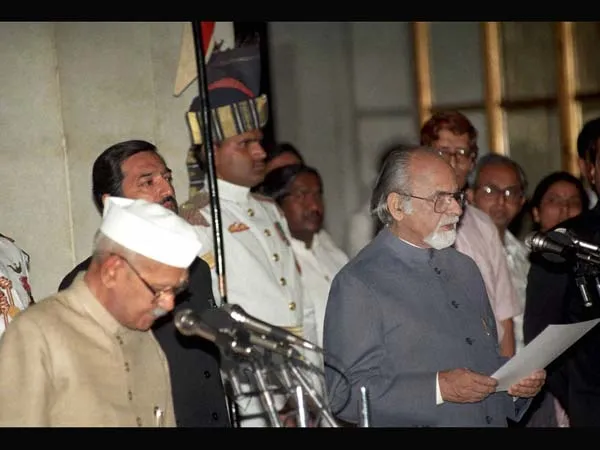
The events cannot be divorced from the political environment at the Centre, where Inder Kumar Gujral headed a United Front government dependent on Congress support. The Governor’s decision was widely interpreted as politically sympathetic to Congress strategy, which sought to unseat a BJP-led state government.
Today, when the Congress party speaks of constitutional morality and federalism, the events of February 1998 demand reflection. The gubernatorial office is not designed to be a partisan lever. Yet in this episode, it appeared precisely that.
The criticism is not rhetorical. It concerns institutional integrity. Governors hold discretionary power, but discretion is not license. It must operate within constitutional restraint.
In 1998, restraint faltered.
Judicial Counterstrike: The High Court Restores Order
The BJP moved swiftly to the Allahabad High Court. The Court examined whether the Governor had acted in accordance with constitutional principles. Its ruling was unambiguous: the dismissal could not stand without a floor test. Kalyan Singh was restored.
Now begins the most surreal chapter.
According to Rahul Srivastava’s account, both claimants arrived at the Secretariat. Kalyan Singh convened a cabinet meeting. Jagdambika Pal occupied the Chief Minister’s chamber. Bureaucrats did not know whom to obey. Files stalled. Orders were contested. The state apparatus hovered in limbo.
For several hours, Uttar Pradesh effectively had two Chief Ministers.
It was constitutional ambiguity manifested in brick and mortar.
The Supreme Court Steps In
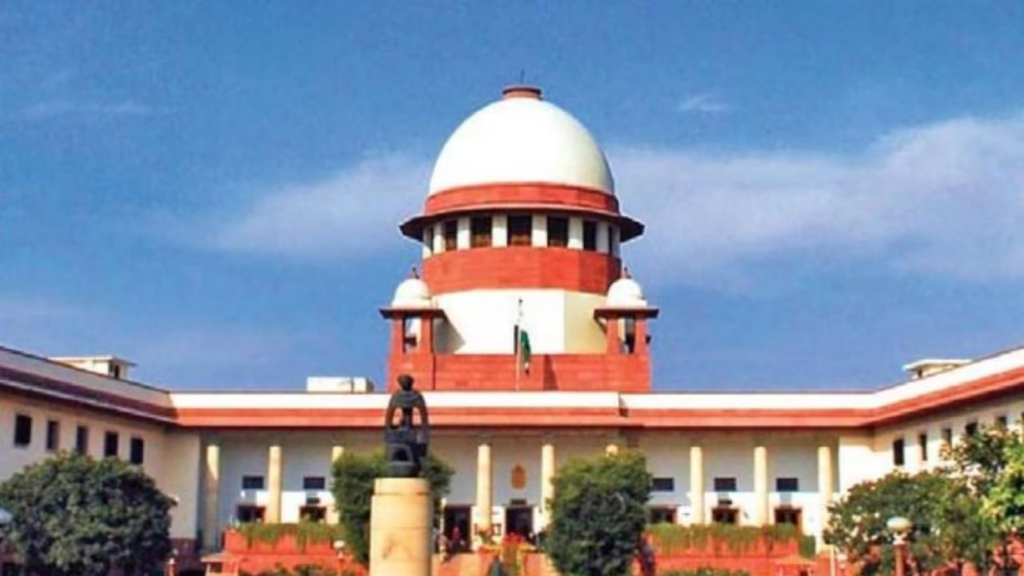
The matter escalated to the Supreme Court. On 24 February 1998, the Court issued a decisive order: a composite floor test within 48 hours.
Both Kalyan Singh and Jagdambika Pal would seek confidence simultaneously. Voting would determine legitimacy — not letters, not midnight ceremonies, not gubernatorial assertions.
The Court insisted on procedural transparency. Cameras were installed in the Assembly. The voting process was monitored carefully. Ballot security was ensured. Every MLA’s vote was to be accounted for.
This insistence on visibility was critical. The Court understood that legitimacy is not merely arithmetic; it is also perception.
25 February 1998: Democracy Reaffirmed
The Assembly met amid extraordinary tension. Members were escorted carefully. Even ill legislators were brought in to vote. The chamber reflected a state under constitutional scrutiny.
When the votes were counted, the result was decisive. Kalyan Singh secured majority support. Jagdambika Pal’s claim collapsed.
The immediate crisis ended.
But something larger had occurred.
The Supreme Court had reinforced a doctrine that would echo in later crises — from Uttarakhand to Karnataka to Maharashtra:
The floor of the Assembly is the only constitutionally valid arena to determine majority.
Governors cannot substitute subjective satisfaction for legislative proof.
A Presidency That Objected
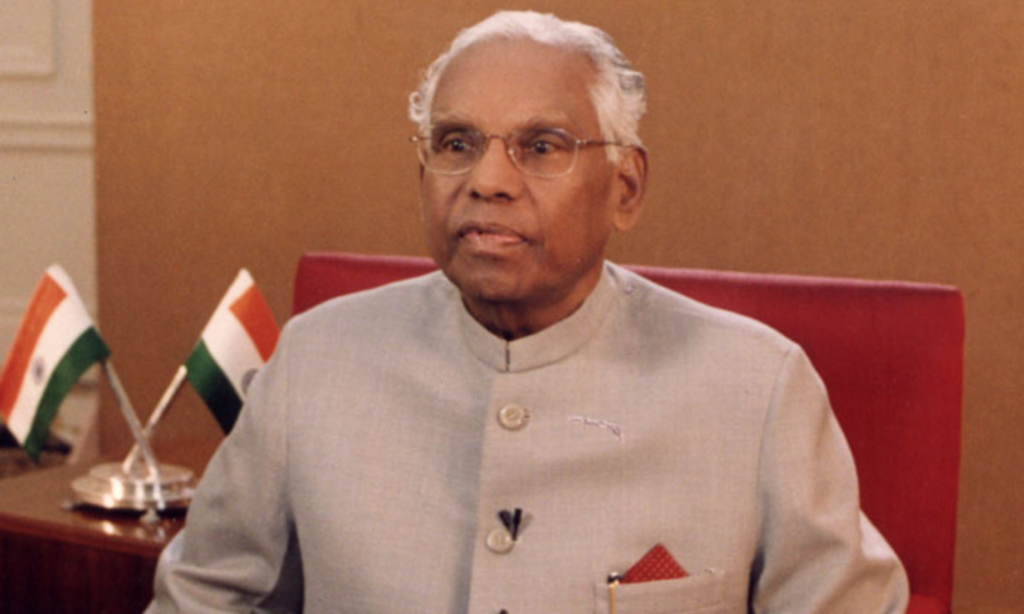
The episode also drew concern at Rashtrapati Bhavan. Then President K R Narayanan reportedly expressed dissatisfaction with the manner in which events had unfolded. The constitutional head of state recognized the danger of precedent.
When institutions begin bypassing established procedure, the damage extends beyond one government.
The Irony of the “One-Day” Chief Minister
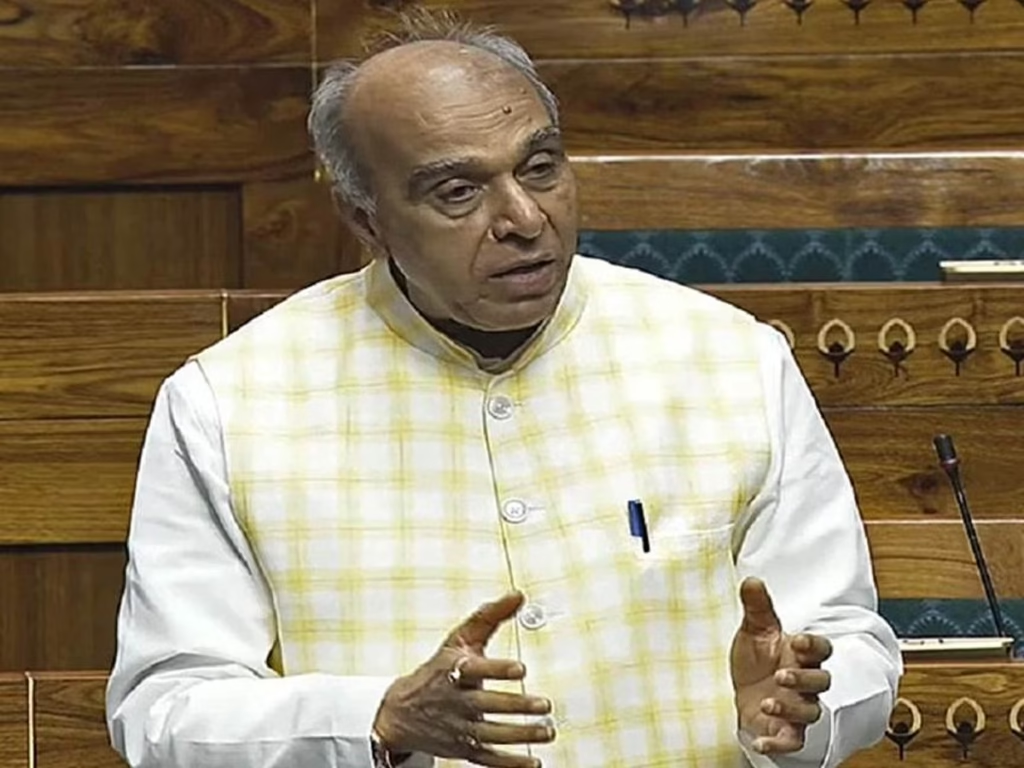
Jagdambika Pal is often remembered as India’s “one-day Chief Minister.” The label is shorthand. Technically, his tenure extended from oath to judicial reversal. Politically, it represents the fragility of power obtained without floor legitimacy.
Unlike cinematic fantasy such as Nayak: The Real Hero, where a one-day Chief Minister transforms governance, the real episode changed little about political culture. Defections continued in Indian politics. Opportunism did not evaporate.
But jurisprudence evolved.
The Deeper Lessons
The Uttar Pradesh crisis of 1998 teaches several enduring lessons:
- Coalitions built on defections are structurally unstable.
- Gubernatorial discretion must be exercised within strict constitutional boundaries.
- Judicial intervention remains a crucial stabilizer in federal crises.
- Transparency in legislative voting protects democratic legitimacy.
It is tempting to view the episode as an aberration of a chaotic political era. That would be an error. Similar patterns have reappeared across states in subsequent decades. The mechanisms differ; the impulse remains.
What prevented Uttar Pradesh from sliding into deeper turmoil in 1998 was not political virtue. It was a constitutional correction.
Why It Still Matters
Today, debates over federalism, gubernatorial conduct, and legislative defections remain central to Indian politics. The events of February 1998 are not merely archival curiosities. They are cautionary precedents.
When a Governor dismisses a government without a floor test, the shadow of Lucknow 1998 looms.
When rival claimants assert majority through paperwork rather than votes, the composite floor test doctrine stands as reminder.
When political actors speak of safeguarding democracy, their commitment must be measured against episodes such as this including their own past conduct.
For three extraordinary days in February 1998, Uttar Pradesh stood at the edge of constitutional improvisation. Two Chief Ministers walked the same corridors. Authority was contested in real time.
India’s democracy survived not because politicians exercised restraint, but because the judiciary enforced procedure.
That distinction between power and legitimacy remains the enduring lesson of the week Uttar Pradesh had two Chief Ministers.