


Nepal’s politics was shaken in September 2025, when a youth-led uprising over a sweeping social media ban forced Prime Minister K.P. Sharma Oli to resign and set the stage for rapper-turned-mayor Balendra (Balen) Shah’s meteoric rise as a prime ministerial contender.
Gen Z’s Social Media Uprising

On 4 September 2025, the K.P. Sharma Oli government abruptly banned 26 major social media platforms, including Facebook, Instagram, WhatsApp, Twitter and YouTube, citing repeated violations of Nepali law and non-compliance on issues like local office setup and grievance officers.
While authorities framed this as a regulatory move, young Nepalis already angry over unemployment, corruption and political nepotism saw it as an attempt to muzzle dissent and shut down online mobilisation.
In the weeks leading up to the ban, a campaign called “Nepo Kids” had gone viral, spotlighting the lavish lifestyles of politicians’ children in sharp contrast to the economic distress of ordinary citizens, fuelling resentment against the ruling elite.
Once the ban came into force, Gen Z activists quickly moved from hashtags to the streets, using alternative channels, encrypted messaging and remaining platforms to coordinate protests under slogans like “Youth Against Corruption”.
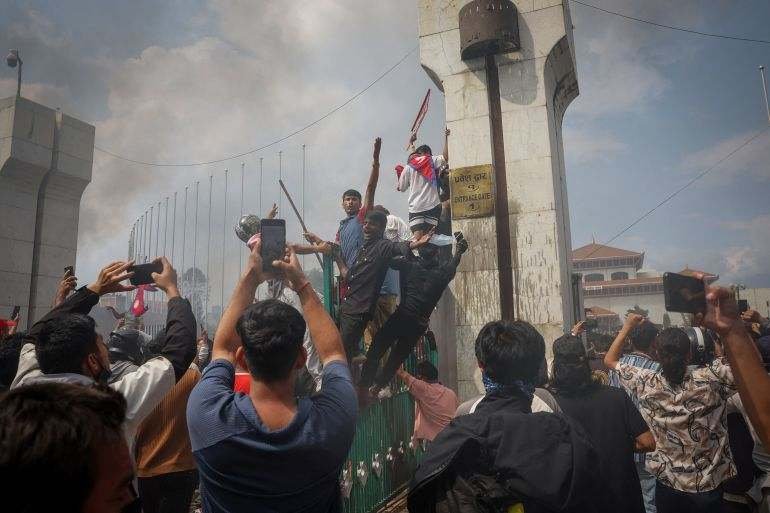
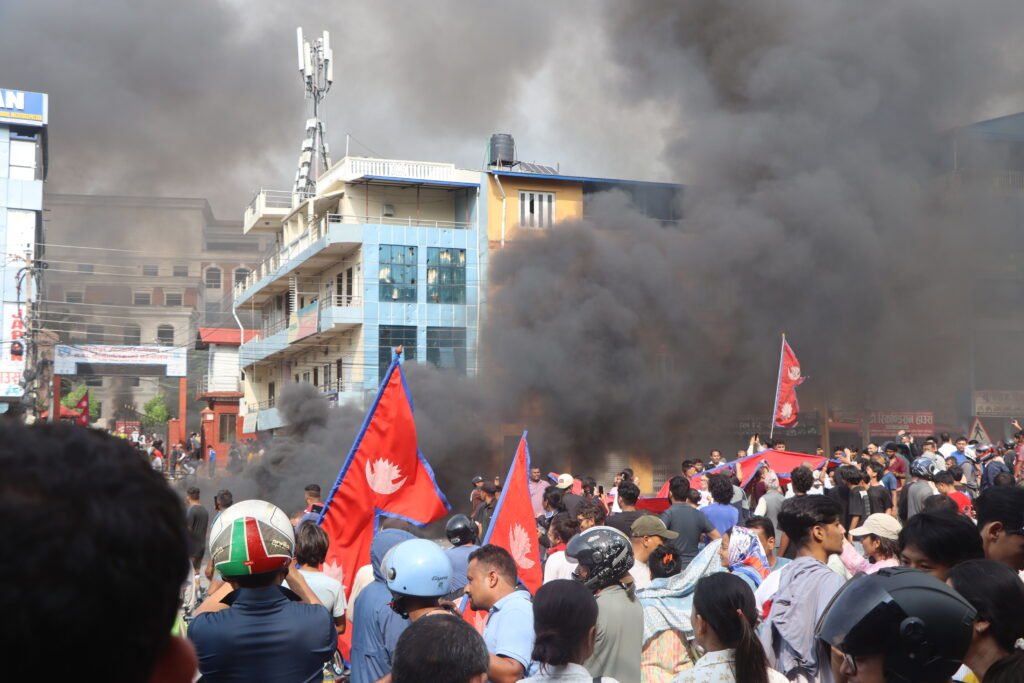
Protesters scale the parliament gate in Kathmandu amid the smoke and chaos of the September 2025 uprising.
Kathmandu On The Boil

By 8 September 2025, Kathmandu’s streets had filled with tens of thousands of mostly young protesters, many of them students and first-time activists, marching under placards demanding restoration of social media, an end to corruption and accountability from entrenched parties.
The Oli government initially dismissed the demonstrations as a passing outburst, but the situation escalated sharply after security forces opened fire on protesters, leaving more than 20 Gen Z youths dead, according to multiple contemporary accounts.
The killings transformed the agitation into a nationwide revolt, with rallies spreading beyond the capital and demonstrators targeting symbols of state power.
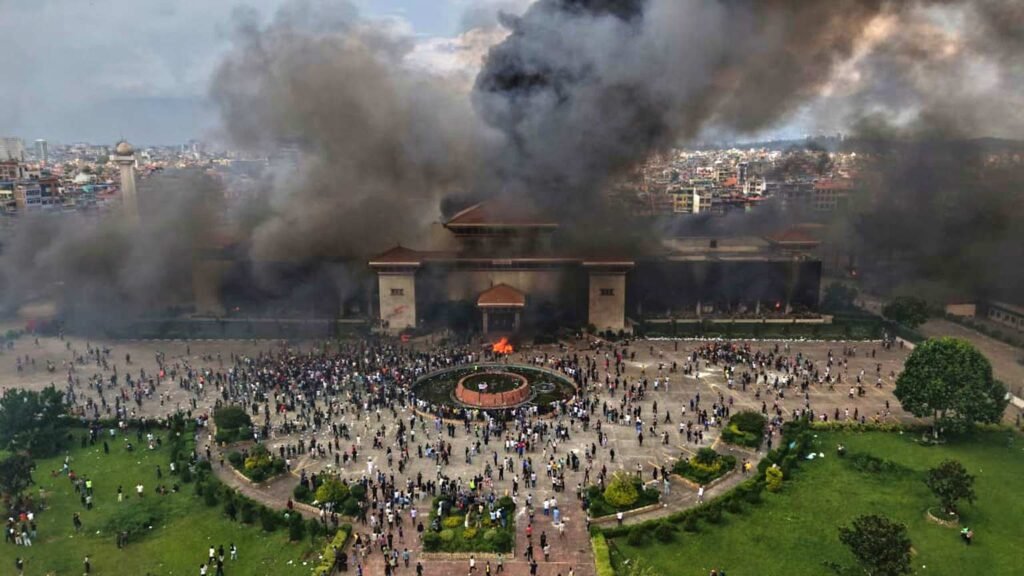
Within days, enraged crowds stormed and set fire to sections of Nepal’s historic parliament building, turning the heart of the country’s democracy into the epicentre of a dramatic regime-toppling confrontation.
The Nepal parliament building ablaze during the deadly protests that forced PM Oli’s resignation.
Oli Resigns, Interim PM Appointed

Facing a spiralling crisis, international scrutiny and a loss of control on the streets, Prime Minister K.P. Sharma Oli – leader of the Communist Party of Nepal (Unified Marxist-Leninist), or CPN-UML – was forced to resign and eventually leave the country.
Oli had come to power after the July 2024 general elections, forming a government with the Nepali Congress despite his long-standing, publicly noted tilt towards China and his choice of Beijing for his first foreign visit as prime minister.
In the aftermath of the protests, some sections of the Gen Z movement demanded that Kathmandu’s independent mayor Balendra (Balen) Shah be made interim prime minister, reflecting his growing appeal as an anti-establishment figure.
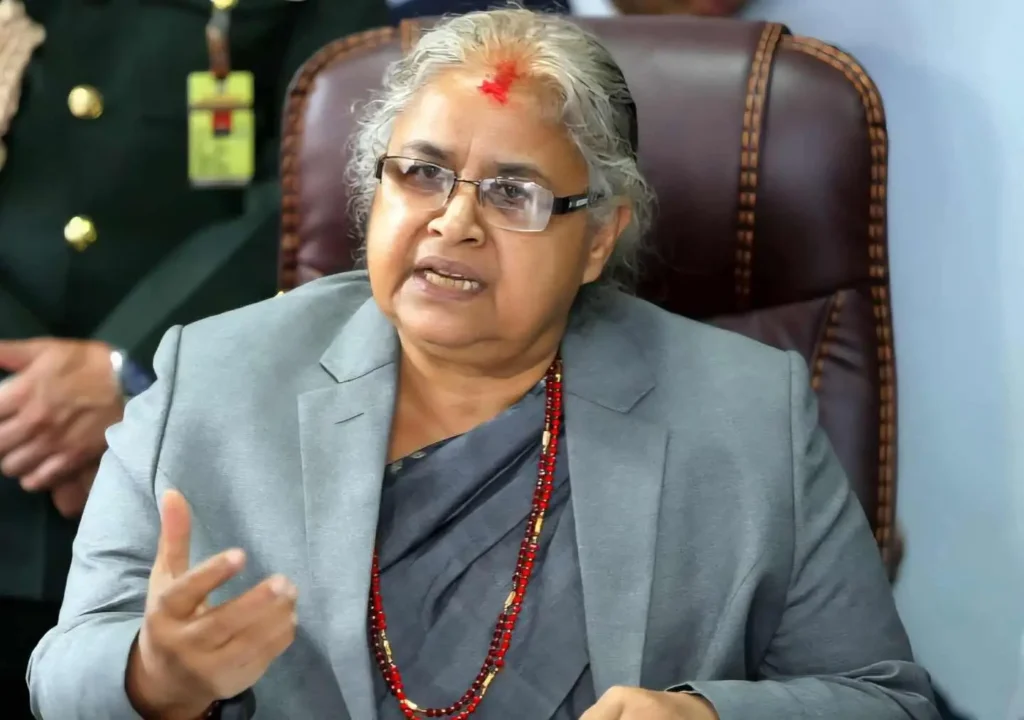
However, the political establishment opted for a more conventional caretaker: on 12 September 2025, former chief justice Sushila Karki, who has academic ties to India’s Banaras Hindu University, was appointed interim prime minister to steer the country towards fresh elections.
Under Nepal’s system, an interim or caretaker prime minister holds power only until a new government, chosen through elections, takes office, and Karki has now led a transitional administration for roughly six months.
Balen Shah: From Rapper To Mayor
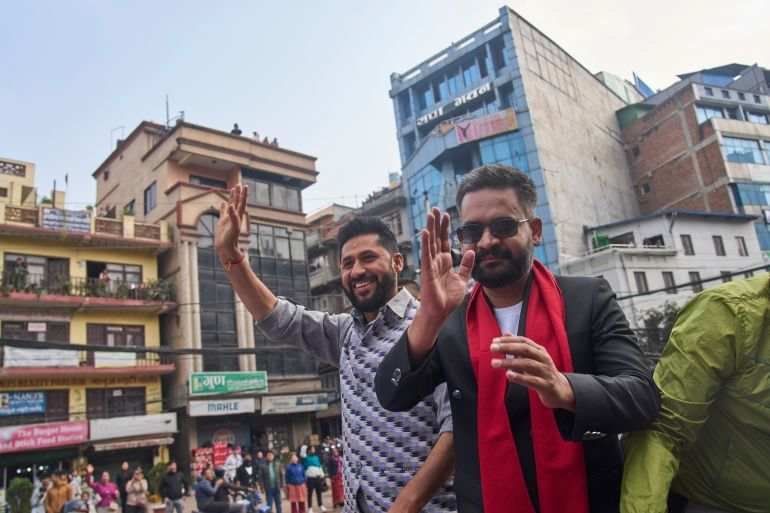
To understand why Balen Shah has emerged as a central figure in this moment, it helps to go back to his unusual journey from underground hip-hop to the political mainstream.
Born in 1990 in Gairigaun, Kathmandu, into a Maithili Madheshi family, Shah’s father was an Ayurvedic doctor and the young Balen grew up navigating both the capital’s urban struggles and the cultural roots of Nepal’s southern plains.
He studied civil engineering at Himalayan White House International College in Nepal before completing a master’s in structural engineering at Visvesvaraya Technological University in India, giving him technical expertise in urban infrastructure and planning.
Alongside his engineering path, Shah nurtured his passion for poetry and rap, writing a track called “Sadak Balak” while still in ninth grade, which released in 2012 and spotlighted youth hardship and social inequality in the city.
Balen Shah in traditional attire at an event, underscoring his cultural roots and appeal to young Nepalis.
His participation in the YouTube battle rap series Raw Barz made him a nationwide name in Nepal’s hip-hop scene, particularly among young listeners.
By the late 2010s, Balen had built a strong personal brand as a blunt, socially conscious artist who spoke directly to a frustrated generation.
A Viral Promise, Then A Historic Win
In 2017, ahead of Kathmandu’s mayoral election, Balen posted on Facebook: “I will not vote today. I am a civil engineering graduate pursuing master’s in structural engineering. I know how to build a country. I will give my vote to myself next election. I cannot depend on anyone else.” He kept his word, winning 2022 mayoral race independently with 61,767 votes against Nepali Congress’s 38,341, becoming Kathmandu’s first non-party mayor.
As mayor, he bulldozed illegal structures, fixed waste management, livestreamed council meetings, building Gen Z trust despite populism accusations.
Balen And The Gen Z Protests

Balen supported protests via 7 September 2025 Facebook post: “This is your movement Gen Z. I’m older, but fully with you. What country do you want?” It went viral, protesters hailed him hero, though critics said he hijacked remotely. Post-Oli fall, demands for him as PM grew.
Nepal’s Fragmented Party Landscape
Post-2008 monarchy abolition, coalitions rotated: Maoist Prachanda, UML’s Oli, Congress’s Deuba (5x PM). Newcomer Rastriya Swatantra Party (RSP), founded 2022 by Rabi Lamichhane, won 20 seats in 2022 polls on anti-corruption platform.
Balen joined RSP December 2025, became PM face, filed from Oli’s Jhapa-5 January 2026.little conventional political experience.
Historic 2026 Election Landslide
Nepal voted 5 March 2026; results 6 March stunned: RSP won 77+ direct seats, swept Kathmandu’s 15, projected 100+ total with PR. Balen crushed Oli in Jhapa-5 (68,348 vs 18,734 votes). Congress/UML/Maoist collapsed. Oli congratulated “Balen babu.” RSP forms government solo; Shah poised as PM.
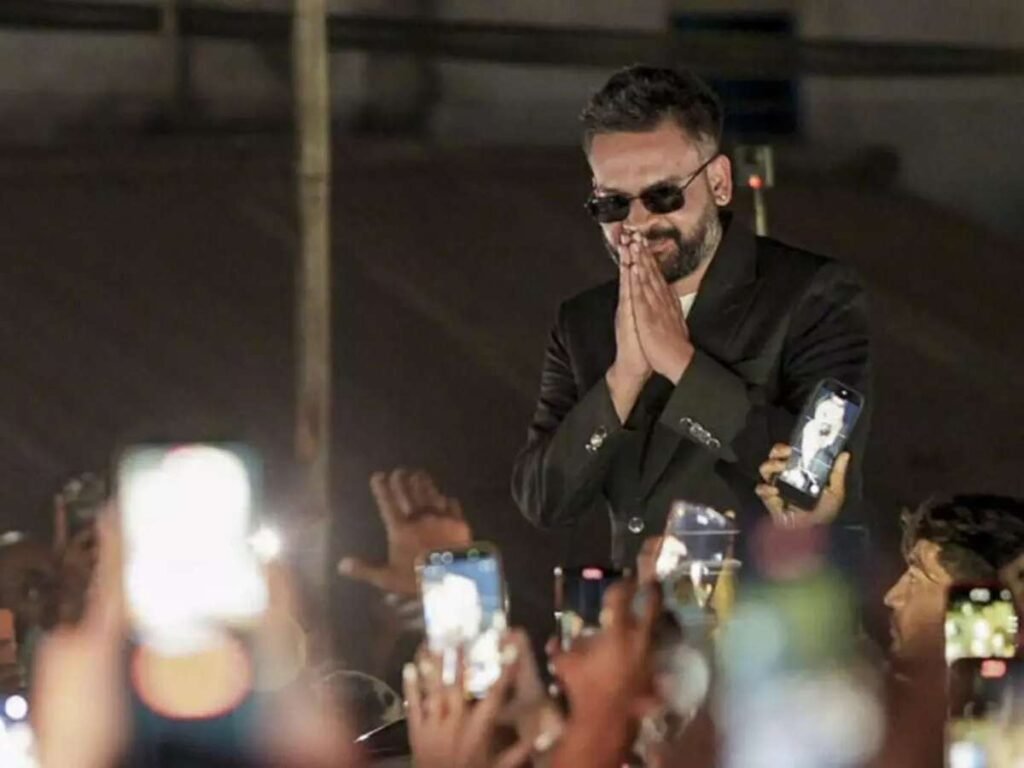
Balen Shah celebrates landslide with namaste gesture.
Shah amid victorious crowds post-Jhapa-5 win.
Legacy Of Youth Revolution
2025 protests reshaped Nepal: from social media ban to rapper PM. Shah’s win ends coalition instability (14 govts/18 yrs), promises transparency. Challenges ahead: economy, federalism, China/India ties. Gen Z rewrote the script.